
Motherboard Power Rails Explained: A Complete Guide for Repair Technicians
Motherboard Power Rails Explained: A Complete Guide for Repair Technicians
Intro (120–150 words):
Explain why power rails are the heart of every motherboard, common mistakes beginners make, and how schematics + boardview help.
What Are Power Rails on a Motherboard?
Explain: dedicated electrical circuits or conductive paths designed to deliver specific, constant DC voltages
- Definition of power rail
- Why multiple voltages exist
- Relationship between CPU, RAM, chipset
Mention: typically +12V, +5V, and +3.3V—from the power supply unit (PSU) to individual components.
- Laptop & desktop boards
- Generic explanation (no model lock)
Common Power Rails in Modern Motherboards
Use table-style explanation (text is fine):
- +19V / VIN
- +12V
- +5VALW / +5V_ALW
- +3VALW / +3V_ALW
- +VCORE
- +VCCSA
- +VCCIO
- +RAM Voltage
Explain purpose of each in simple language.
Always Rails vs Switched Rails (IMPORTANT)
Explain: These rails are active the moment the power supply is plugged into the wall, even if the computer is turned off.
- What “Always ON” means
- What “Switched” means
- Why board looks dead if ALW rails missing
This is high-value technician content.
Understanding Power Sequence Using Schematics
- Enable signals (EN, PWR_EN)
- Role of EC / SIO / PCH
- Step-by-step power-up logic
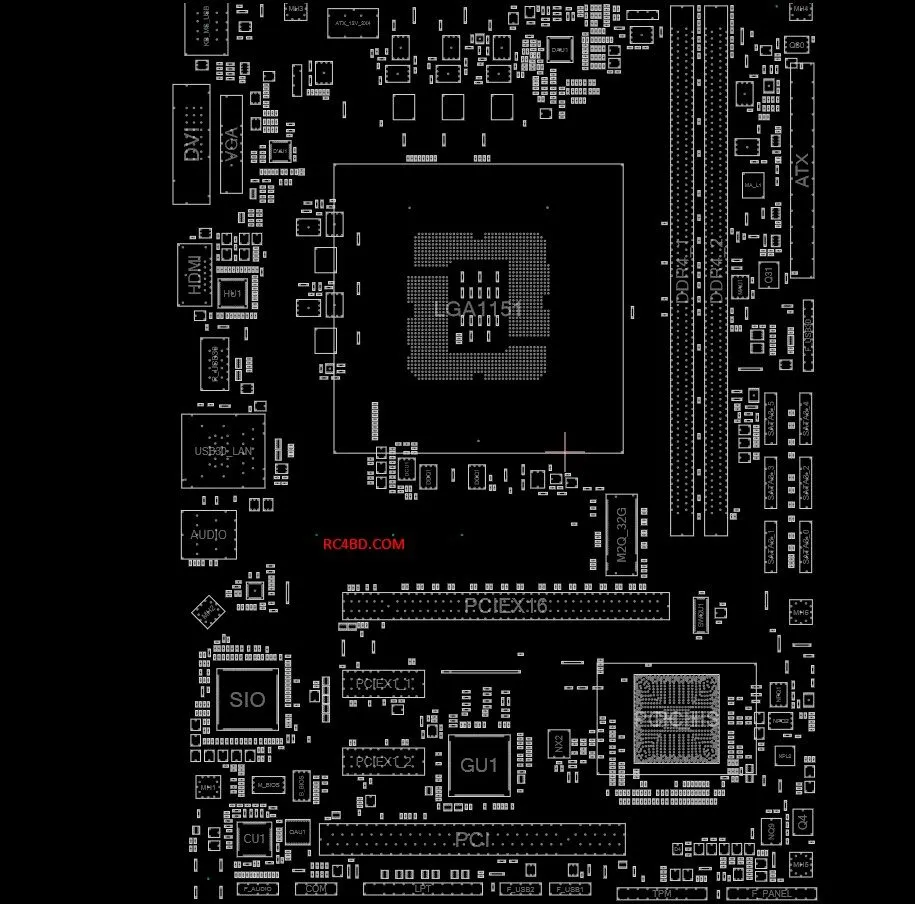
(Refer to schematic of GA-B250M-HD3 REV1.0 BoardView
How BoardView Helps Trace Power Rails
Explain:
- Finding rail nets
- Locating coils & MOSFETs
- Matching schematic → boardview → PCB
Explain why boardview saves time.
Measuring Power Rails with a Multimeter
Explain:
- Ground reference
- Expected values
- Safety tips
Include:
- What zero voltage means
- What shorted rail symptoms look like
Common Power Rail Faults and Their Causes
Examples:
- Short to ground
- Missing enable signal
- Bad coil / MOSFET
- EC not waking up
Keep model-agnostic.
Power Rail Troubleshooting Workflow (Professional Method)
Step-by-step flow:
- Check VIN
- Check ALW rails
- Check enable signals
- Check VCORE last
This is GOLD content.
Power Rail Differences Between Laptop and Desktop Boards
Explain:
- Adapter vs PSU
- Battery charging ICs
- Desktop VRM complexity
Final Thoughts
Summarize:
- Why power rails are fundamental
- Why schematic + boardview knowledge matters
- Encourage learning, not guessing
Soft CTA: